Artlabeling Activity Types of Tissues Resulting From Cell Differentiation
The Tissue Level of Organization
Connective Tissue Supports and Protects
Learning Objectives
Past the end of this section, you will exist able to:
- Place and distinguish betwixt the types of connective tissue: proper, supportive, and fluid
- Explain the functions of connective tissues
As may be obvious from its name, one of the major functions of connective tissue is to connect tissues and organs. Unlike epithelial tissue, which is equanimous of cells closely packed with little or no extracellular space in betwixt, connective tissue cells are dispersed in a matrix. The matrix usually includes a big amount of extracellular fabric produced by the connective tissue cells that are embedded within it. The matrix plays a major role in the operation of this tissue. The major component of the matrix is a ground substance often crisscrossed by poly peptide fibers. This ground substance is ordinarily a fluid, but information technology tin can also be mineralized and solid, as in bones. Connective tissues come up in a vast variety of forms, yet they typically have in common three characteristic components: cells, big amounts of amorphous ground substance, and protein fibers. The amount and structure of each component correlates with the office of the tissue, from the rigid ground substance in bones supporting the torso to the inclusion of specialized cells; for instance, a phagocytic cell that engulfs pathogens and besides rids tissue of cellular droppings.
Functions of Connective Tissues
Connective tissues perform many functions in the torso, but nearly importantly, they back up and connect other tissues; from the connective tissue sheath that surrounds muscle cells, to the tendons that adhere muscles to bones, and to the skeleton that supports the positions of the trunk. Protection is another major function of connective tissue, in the form of fibrous capsules and bones that protect delicate organs and, of course, the skeletal organization. Specialized cells in connective tissue defend the body from microorganisms that enter the torso. Transport of fluid, nutrients, waste, and chemic messengers is ensured by specialized fluid connective tissues, such as blood and lymph. Adipose cells shop surplus energy in the course of fat and contribute to the thermal insulation of the trunk.
Embryonic Connective Tissue
All connective tissues derive from the mesodermal layer of the embryo (see (Effigy)). The kickoff connective tissue to develop in the embryo is mesenchyme, the stem prison cell line from which all connective tissues are later derived. Clusters of mesenchymal cells are scattered throughout adult tissue and supply the cells needed for replacement and repair later on a connective tissue injury. A second type of embryonic connective tissue forms in the umbilical cord, called mucous connective tissue or Wharton'south jelly. This tissue is no longer present after nativity, leaving only scattered mesenchymal cells throughout the body.
Classification of Connective Tissues
The three broad categories of connective tissue are classified according to the characteristics of their footing substance and the types of fibers found within the matrix ((Figure)). Connective tissue proper includes loose connective tissue and dumbo connective tissue. Both tissues accept a diverseness of cell types and protein fibers suspended in a gluey ground substance. Dense connective tissue is reinforced by bundles of fibers that provide tensile force, elasticity, and protection. In loose connective tissue, the fibers are loosely organized, leaving big spaces in between. Supportive connective tissue—bone and cartilage—provide structure and strength to the body and protect soft tissues. A few distinct cell types and densely packed fibers in a matrix characterize these tissues. In os, the matrix is rigid and described as calcified because of the deposited calcium salts. In fluid connective tissue, in other words, lymph and blood, diverse specialized cells circulate in a watery fluid containing salts, nutrients, and dissolved proteins.
| Connective Tissue Examples | ||
|---|---|---|
| Connective tissue proper | Supportive connective tissue | Fluid connective tissue |
Loose connective tissue
| Cartilage
| Blood |
Dense connective tissue
| Basic
| Lymph |
Connective Tissue Proper
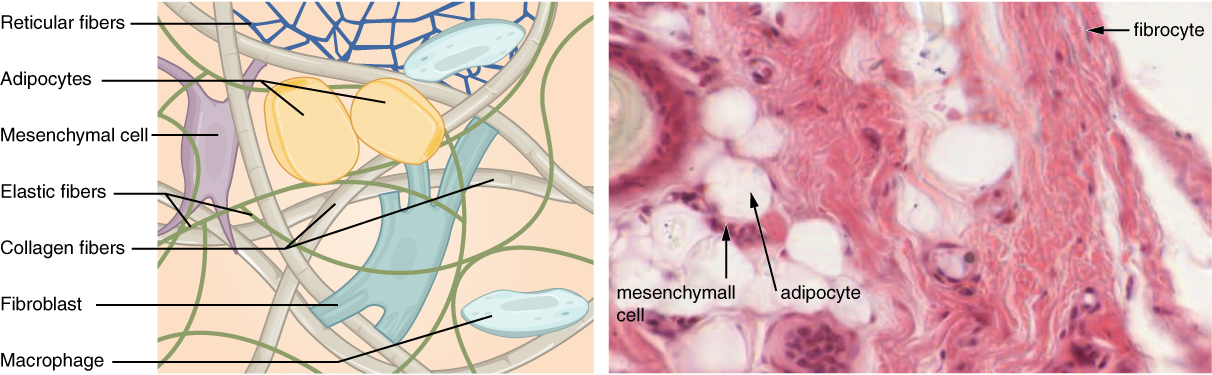
Fibroblasts are present in all connective tissue proper ((Figure)). Fibrocytes, adipocytes, and mesenchymal cells are fixed cells, which means they remain within the connective tissue. Other cells move in and out of the connective tissue in response to chemical signals. Macrophages, mast cells, lymphocytes, plasma cells, and phagocytic cells are found in connective tissue proper but are really part of the immune organisation protecting the body.
Connective Tissue Proper
Fibroblasts produce this fibrous tissue. Connective tissue proper includes the fixed cells fibrocytes, adipocytes, and mesenchymal cells. LM × 400. (Micrograph provided past the Regents of University of Michigan Medical School © 2012)
Cell Types
The near abundant jail cell in connective tissue proper is the fibroblast. Polysaccharides and proteins secreted past fibroblasts combine with extra-cellular fluids to produce a viscous ground substance that, with embedded fibrous proteins, forms the actress-cellular matrix. As you might expect, a fibrocyte, a less agile grade of fibroblast, is the second most mutual jail cell blazon in connective tissue proper.
Adipocytes are cells that store lipids as aerosol that fill almost of the cytoplasm. There are two basic types of adipocytes: white and dark-brown. The brown adipocytes store lipids equally many droplets, and have high metabolic activity. In dissimilarity, white fat adipocytes store lipids every bit a single large driblet and are metabolically less active. Their effectiveness at storing large amounts of fatty is witnessed in obese individuals. The number and type of adipocytes depends on the tissue and location, and vary among individuals in the population.
The mesenchymal cell is a multipotent developed stem cell. These cells can differentiate into any blazon of connective tissue cells needed for repair and healing of damaged tissue.
The macrophage cell is a large cell derived from a monocyte, a type of blood cell, which enters the connective tissue matrix from the blood vessels. The macrophage cells are an essential component of the immune system, which is the body'due south defense against potential pathogens and degraded host cells. When stimulated, macrophages release cytokines, small proteins that act as chemical messengers. Cytokines recruit other cells of the immune system to infected sites and stimulate their activities. Roaming, or free, macrophages move rapidly by amoeboid movement, engulfing infectious agents and cellular debris. In contrast, fixed macrophages are permanent residents of their tissues.
The mast cell, institute in connective tissue proper, has many cytoplasmic granules. These granules contain the chemical signals histamine and heparin. When irritated or damaged, mast cells release histamine, an inflammatory mediator, which causes vasodilation and increased blood flow at a site of injury or infection, forth with itching, swelling, and redness you recognize every bit an allergic response. Similar blood cells, mast cells are derived from hematopoietic stalk cells and are part of the immune system.
Connective Tissue Fibers and Footing Substance
Three principal types of fibers are secreted by fibroblasts: collagen fibers, elastic fibers, and reticular fibers. Collagen fiber is made from fibrous protein subunits linked together to course a long and directly fiber. Collagen fibers, while flexible, have peachy tensile force, resist stretching, and give ligaments and tendons their characteristic resilience and force. These fibers hold connective tissues together, even during the movement of the trunk.
Rubberband fiber contains the poly peptide elastin forth with bottom amounts of other proteins and glycoproteins. The main belongings of elastin is that after existence stretched or compressed, information technology will return to its original shape. Elastic fibers are prominent in elastic tissues found in skin and the elastic ligaments of the vertebral column.
Reticular fiber is also formed from the same poly peptide subunits equally collagen fibers; nevertheless, these fibers remain narrow and are arrayed in a branching network. They are found throughout the torso, but are nearly abundant in the reticular tissue of soft organs, such as liver and spleen, where they ballast and provide structural support to the parenchyma (the functional cells, blood vessels, and nerves of the organ).
All of these fiber types are embedded in basis substance. Secreted by fibroblasts, ground substance is fabricated of polysaccharides, specifically hyaluronic acid, and proteins. These combine to form a proteoglycan with a protein core and polysaccharide branches. The proteoglycan attracts and traps available moisture forming the clear, viscous, colorless matrix you now know every bit ground substance.
Loose Connective Tissue
Loose connective tissue is constitute between many organs where it acts both to absorb stupor and demark tissues together. Information technology allows h2o, salts, and various nutrients to diffuse through to adjacent or imbedded cells and tissues.
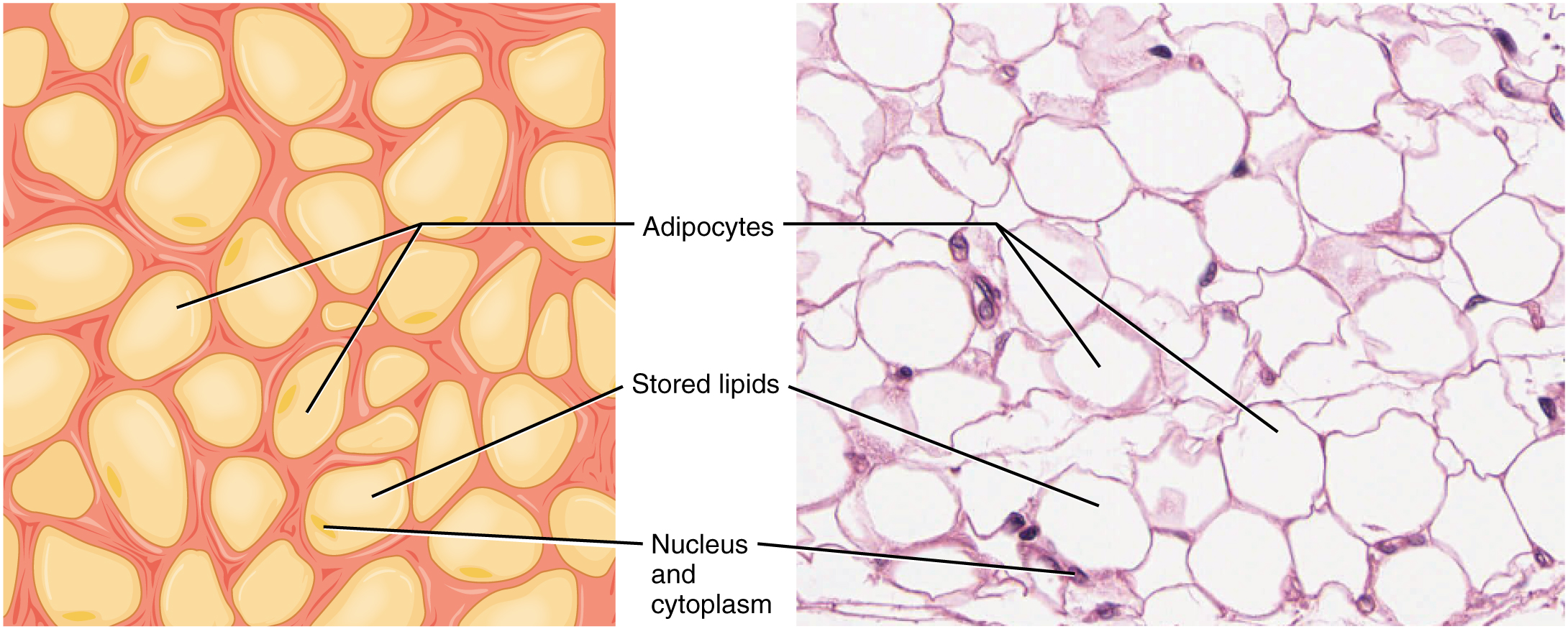
Adipose tissue consists more often than not of fatty storage cells, with footling extracellular matrix ((Effigy)). A big number of capillaries allow rapid storage and mobilization of lipid molecules. White adipose tissue is almost abundant. Information technology can appear xanthous and owes its color to carotene and related pigments from plant nutrient. White fat contributes more often than not to lipid storage and can serve as insulation from cold temperatures and mechanical injuries. White adipose tissue can be found protecting the kidneys and cushioning the back of the eye. Brown adipose tissue is more common in infants, hence the term "babe fatty." In adults, there is a reduced amount of brown fat and information technology is found mainly in the neck and clavicular regions of the trunk. The many mitochondria in the cytoplasm of brownish adipose tissue help explicate its efficiency at metabolizing stored fat. Brown adipose tissue is thermogenic, pregnant that every bit it breaks down fats, it releases metabolic estrus, rather than producing adenosine triphosphate (ATP), a primal molecule used in metabolism.
Adipose Tissue
This is a loose connective tissue that consists of fatty cells with little extracellular matrix. It stores fat for energy and provides insulation. LM × 800. (Micrograph provided by the Regents of University of Michigan Medical School © 2012)
Areolar tissue shows little specialization. Information technology contains all the cell types and fibers previously described and is distributed in a random, web-similar fashion. Information technology fills the spaces between musculus fibers, surrounds blood and lymph vessels, and supports organs in the intestinal cavity. Areolar tissue underlies most epithelia and represents the connective tissue component of epithelial membranes, which are described further in a subsequently department.
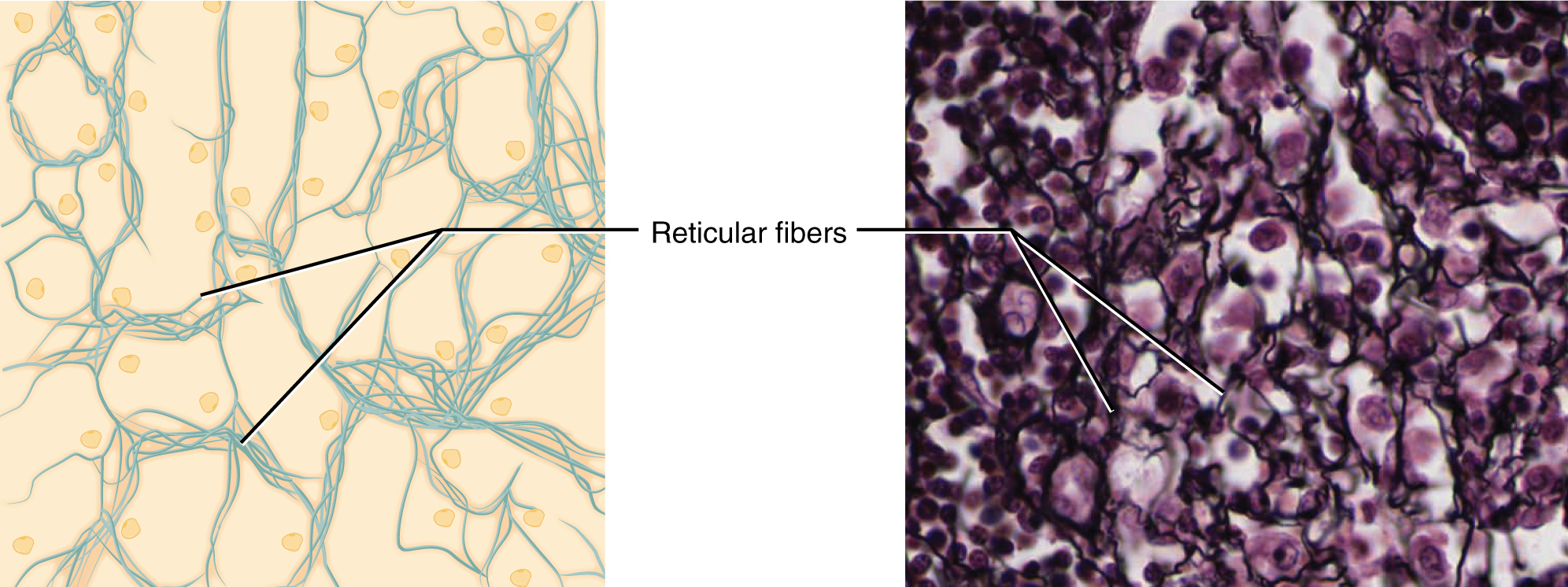
Reticular tissue is a mesh-like, supportive framework for soft organs such as lymphatic tissue, the spleen, and the liver ((Figure)). Reticular cells produce the reticular fibers that class the network onto which other cells attach. It derives its proper noun from the Latin reticulus, which ways "little net."
Reticular Tissue
This is a loose connective tissue fabricated up of a network of reticular fibers that provides a supportive framework for soft organs. LM × 1600. (Micrograph provided past the Regents of University of Michigan Medical School © 2012)
Dense Connective Tissue
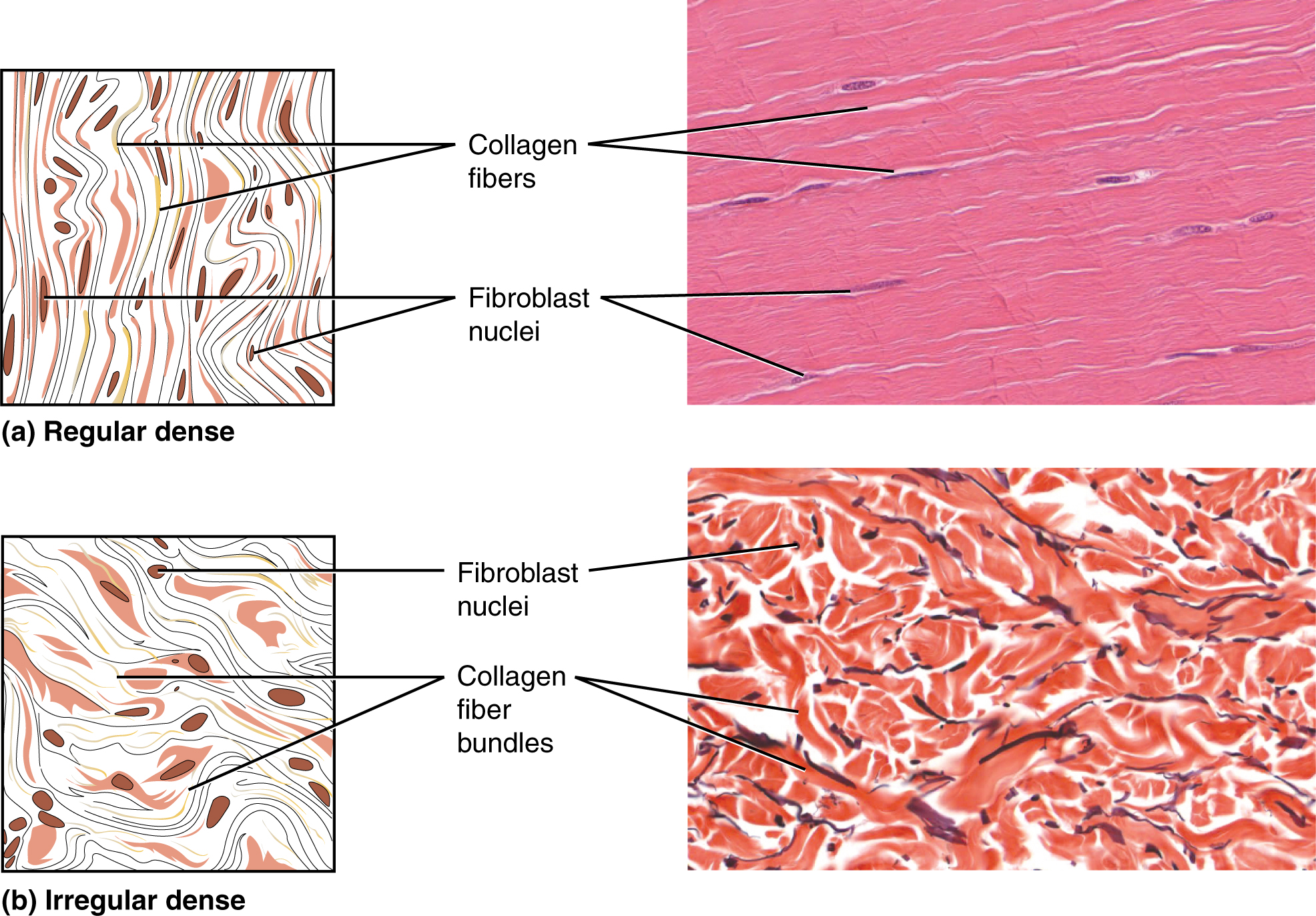
Dense connective tissue contains more than collagen fibers than does loose connective tissue. As a consequence, it displays greater resistance to stretching. There are two major categories of dense connective tissue: regular and irregular. Dense regular connective tissue fibers are parallel to each other, enhancing tensile strength and resistance to stretching in the direction of the cobweb orientations. Ligaments and tendons are made of dense regular connective tissue, merely in ligaments not all fibers are parallel. Dense regular elastic tissue contains elastin fibers in addition to collagen fibers, which allows the ligament to return to its original length afterwards stretching. The ligaments in the vocal folds and betwixt the vertebrae in the vertebral column are elastic.
In dense irregular connective tissue, the direction of fibers is random. This arrangement gives the tissue greater strength in all directions and less strength in one particular direction. In some tissues, fibers crisscross and form a mesh. In other tissues, stretching in several directions is achieved by alternating layers where fibers run in the same orientation in each layer, and it is the layers themselves that are stacked at an angle. The dermis of the peel is an instance of dense irregular connective tissue rich in collagen fibers. Dense irregular elastic tissues give arterial walls the strength and the ability to regain original shape afterward stretching ((Effigy)).
Dense Connective Tissue
(a) Dense regular connective tissue consists of collagenous fibers packed into parallel bundles. (b) Dense irregular connective tissue consists of collagenous fibers interwoven into a mesh-like network. From acme, LM × 1000, LM × 200. (Micrographs provided past the Regents of University of Michigan Medical School © 2012)
Disorders of the…
Connective Tissue: Tendinitis Your opponent stands prepare every bit you set up to hit the serve, but you are confident that you will blast the ball past your opponent. As y'all toss the ball high in the air, a called-for pain shoots beyond your wrist and you lot driblet the tennis dissonance. That boring ache in the wrist that you ignored through the summer is now an unbearable pain. The game is over for now.
After examining your swollen wrist, the doctor in the emergency room announces that you have developed wrist tendinitis. She recommends icing the tender area, taking non-steroidal anti-inflammatory medication to ease the hurting and to reduce swelling, and complete residuum for a few weeks. She interrupts your protests that you lot cannot stop playing. She problems a stern warning about the risk of aggravating the condition and the possibility of surgery. She consoles yous by mentioning that well known tennis players such as Venus and Serena Williams and Rafael Nadal take also suffered from tendinitis related injuries.
What is tendinitis and how did information technology happen? Tendinitis is the inflammation of a tendon, the thick ring of fibrous connective tissue that attaches a muscle to a bone. The condition causes pain and tenderness in the area around a joint. On rare occasions, a sudden serious injury will cause tendinitis. Most frequently, the status results from repetitive motions over fourth dimension that strain the tendons needed to perform the tasks.
Persons whose jobs and hobbies involve performing the same movements over and over over again are often at the greatest chance of tendinitis. You hear of tennis and golfer's elbow, jumper's articulatio genus, and swimmer's shoulder. In all cases, overuse of the joint causes a microtrauma that initiates the inflammatory response. Tendinitis is routinely diagnosed through a clinical examination. In example of severe pain, 10-rays can be examined to dominion out the possibility of a bone injury. Severe cases of tendinitis can even tear loose a tendon. Surgical repair of a tendon is painful. Connective tissue in the tendon does non have abundant claret supply and heals slowly.
While older adults are at adventure for tendinitis because the elasticity of tendon tissue decreases with age, agile people of all ages can develop tendinitis. Immature athletes, dancers, and computer operators; anyone who performs the same movements constantly is at adventure for tendinitis. Although repetitive motions are unavoidable in many activities and may atomic number 82 to tendinitis, precautions tin can be taken that can lessen the probability of developing tendinitis. For active individuals, stretches before exercising and cross grooming or changing exercises are recommended. For the passionate athlete, it may be fourth dimension to accept some lessons to ameliorate technique. All of the preventive measures aim to increase the forcefulness of the tendon and decrease the stress put on it. With proper balance and managed intendance, you volition be back on the court to hitting that slice-spin serve over the cyberspace.
Watch this animation to learn more about tendonitis, a painful condition caused past swollen or injured tendons.
Supportive Connective Tissues
Two major forms of supportive connective tissue, cartilage and bone, allow the body to maintain its posture and protect internal organs.
Cartilage
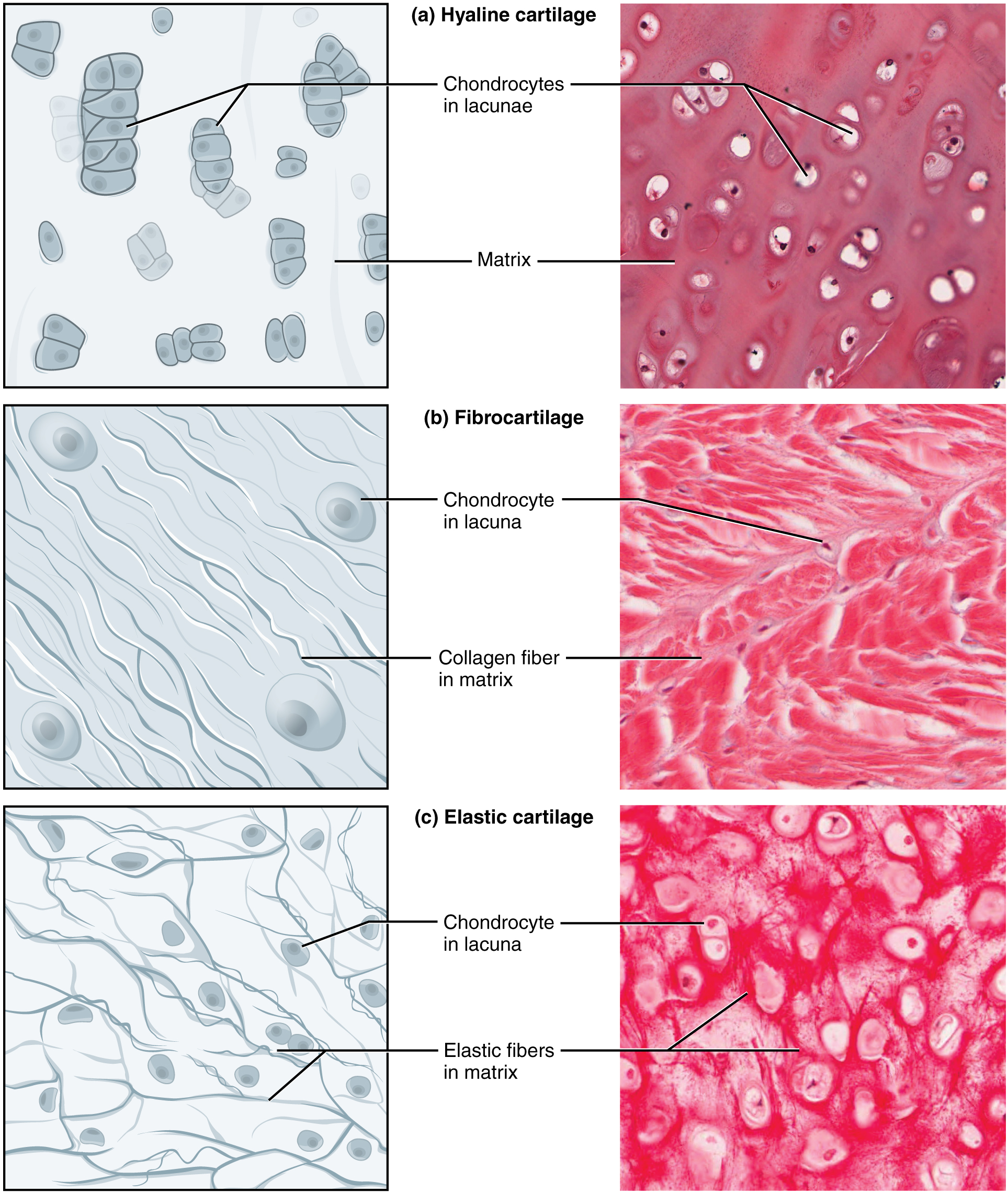
The distinctive appearance of cartilage is due to polysaccharides called chondroitin sulfates, which bind with basis substance proteins to course proteoglycans. Embedded within the cartilage matrix are chondrocytes, or cartilage cells, and the space they occupy are called lacunae (atypical = lacuna). A layer of dense irregular connective tissue, the perichondrium, encapsulates the cartilage. Cartilaginous tissue is avascular, thus all nutrients demand to diffuse through the matrix to reach the chondrocytes. This is a factor contributing to the very irksome healing of cartilaginous tissues.
The 3 main types of cartilage tissue are hyaline cartilage, fibrocartilage, and elastic cartilage ((Figure)). Hyaline cartilage, the most common blazon of cartilage in the trunk, consists of short and dispersed collagen fibers and contains big amounts of proteoglycans. Under the microscope, tissue samples appear clear. The surface of hyaline cartilage is smooth. Both strong and flexible, it is found in the rib cage and nose and covers bones where they come across to form moveable joints. Information technology makes up a template of the embryonic skeleton earlier bone germination. A plate of hyaline cartilage at the ends of bone allows continued growth until adulthood. Fibrocartilage is tough because it has thick bundles of collagen fibers dispersed through its matrix. Menisci in the knee joint and the intervertebral discs are examples of fibrocartilage. Elastic cartilage contains elastic fibers as well as collagen and proteoglycans. This tissue gives rigid support also every bit elasticity. Tug gently at your ear lobes, and find that the lobes return to their initial shape. The external ear contains rubberband cartilage.
Types of Cartilage
Cartilage is a connective tissue consisting of collagenous fibers embedded in a firm matrix of chondroitin sulfates. (a) Hyaline cartilage provides support with some flexibility. The example is from canis familiaris tissue. (b) Fibrocartilage provides some compressibility and can absorb pressure. (c) Elastic cartilage provides firm but elastic support. From top, LM × 300, LM × 1200, LM × 1016. (Micrographs provided by the Regents of University of Michigan Medical School © 2012)
Bone
Bone is the hardest connective tissue. It provides protection to internal organs and supports the body. Os'due south rigid extracellular matrix contains more often than not collagen fibers embedded in a mineralized ground substance containing hydroxyapatite, a form of calcium phosphate. Both components of the matrix, organic and inorganic, contribute to the unusual properties of bone. Without collagen, basic would be brittle and shatter easily. Without mineral crystals, bones would flex and provide lilliputian support. Osteocytes, os cells like chondrocytes, are located inside lacunae. The histology of transverse tissue from long os shows a typical arrangement of osteocytes in concentric circles around a central canal. Bone is a highly vascularized tissue. Unlike cartilage, bone tissue can recover from injuries in a relatively short time.
Cancellous bone looks like a sponge under the microscope and contains empty spaces between trabeculae, or arches of bone proper. It is lighter than compact bone and institute in the interior of some basic and at the finish of long basic. Compact bone is solid and has greater structural strength.
Fluid Connective Tissue
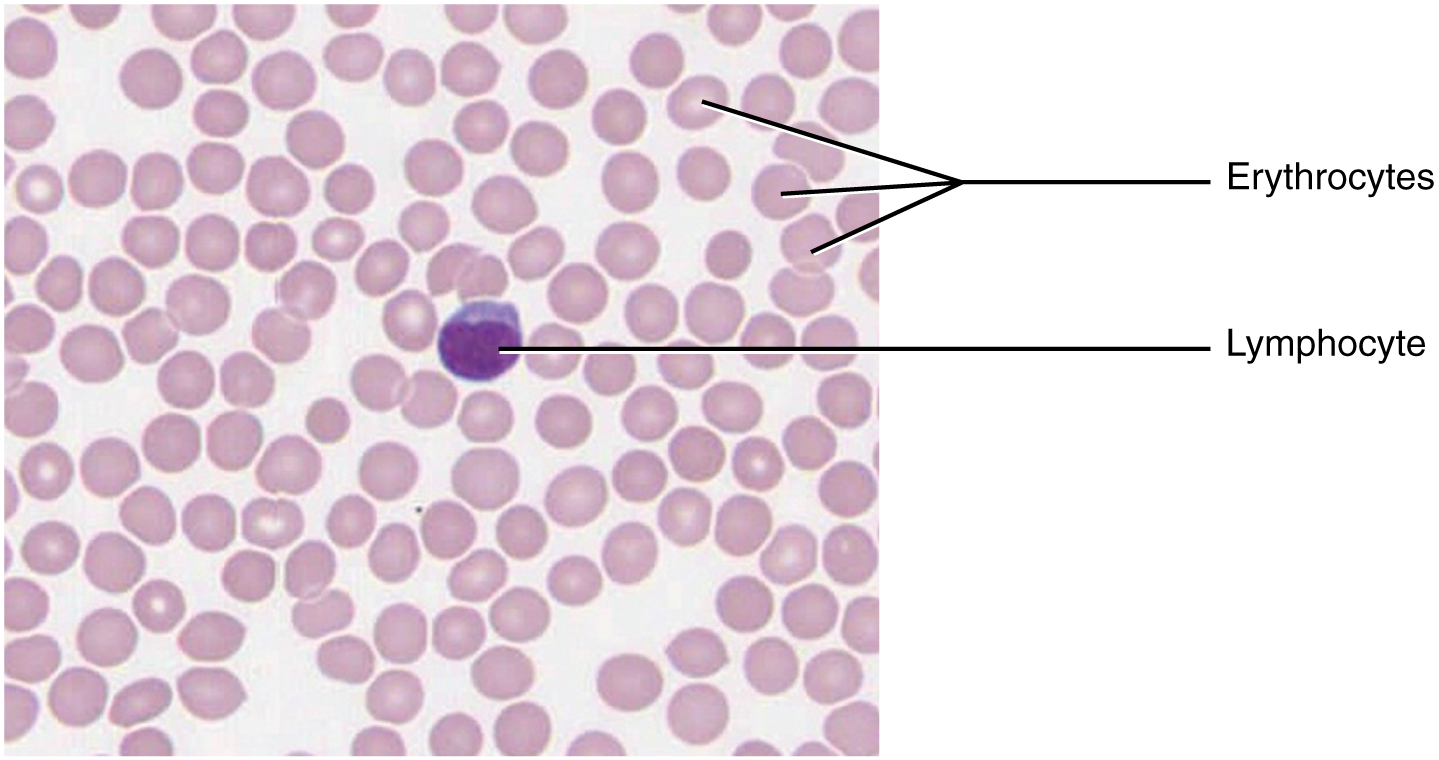
Blood and lymph are fluid connective tissues. Cells circulate in a liquid extracellular matrix. The formed elements circulating in claret are all derived from hematopoietic stem cells located in bone marrow ((Figure)). Erythrocytes, scarlet claret cells, ship oxygen and some carbon dioxide. Leukocytes, white blood cells, are responsible for defending against potentially harmful microorganisms or molecules. Platelets are cell fragments involved in blood clotting. Some white blood cells have the ability to cross the endothelial layer that lines blood vessels and enter side by side tissues. Nutrients, salts, and wastes are dissolved in the liquid matrix and transported through the trunk.
Lymph contains a liquid matrix and white blood cells. Lymphatic capillaries are extremely permeable, allowing larger molecules and backlog fluid from interstitial spaces to enter the lymphatic vessels. Lymph drains into blood vessels, delivering molecules to the blood that could not otherwise straight enter the bloodstream. In this fashion, specialized lymphatic capillaries ship absorbed fats away from the intestine and evangelize these molecules to the blood.
Claret: A Fluid Connective Tissue
Blood is a fluid connective tissue containing erythrocytes and various types of leukocytes that broadcast in a liquid extracellular matrix. LM × 1600. (Micrograph provided by the Regents of University of Michigan Medical School © 2012)
Visit this link to examination your connective tissue knowledge with this 10-question quiz. Tin can yous name the ten tissue types shown in the histology slides?
Affiliate Review
Connective tissue is a heterogeneous tissue with many prison cell shapes and tissue architecture. Structurally, all connective tissues contain cells that are embedded in an extracellular matrix stabilized by proteins. The chemic nature and concrete layout of the extracellular matrix and proteins vary enormously amongst tissues, reflecting the variety of functions that connective tissue fulfills in the torso. Connective tissues separate and cushion organs, protecting them from shifting or traumatic injury. Connect tissues provide support and aid movement, store and transport free energy molecules, protect against infections, and contribute to temperature homeostasis.
Many different cells contribute to the germination of connective tissues. They originate in the mesodermal germ layer and differentiate from mesenchyme and hematopoietic tissue in the bone marrow. Fibroblasts are the most abundant and secrete many protein fibers, adipocytes specialize in fat storage, hematopoietic cells from the os marrow give rise to all the blood cells, chondrocytes form cartilage, and osteocytes form bone. The extracellular matrix contains fluid, proteins, polysaccharide derivatives, and, in the case of os, mineral crystals. Protein fibers fall into three major groups: collagen fibers that are thick, strong, flexible, and resist stretch; reticular fibers that are sparse and course a supportive mesh; and elastin fibers that are thin and elastic.
The major types of connective tissue are connective tissue proper, supportive tissue, and fluid tissue. Loose connective tissue proper includes adipose tissue, areolar tissue, and reticular tissue. These serve to concord organs and other tissues in place and, in the case of adipose tissue, isolate and shop energy reserves. The matrix is the most abundant feature for loose tissue although adipose tissue does not take much extracellular matrix. Dense connective tissue proper is richer in fibers and may be regular, with fibers oriented in parallel equally in ligaments and tendons, or irregular, with fibers oriented in several directions. Organ capsules (collagenous type) and walls of arteries (elastic type) incorporate dense irregular connective tissue. Cartilage and bone are supportive tissue. Cartilage contains chondrocytes and is somewhat flexible. Hyaline cartilage is smooth and clear, covers joints, and is found in the growing portion of bones. Fibrocartilage is tough because of actress collagen fibers and forms, among other things, the intervertebral discs. Elastic cartilage can stretch and recoil to its original shape because of its loftier content of elastic fibers. The matrix contains very few blood vessels. Bones are made of a rigid, mineralized matrix containing calcium salts, crystals, and osteocytes lodged in lacunae. Os tissue is highly vascularized. Cancellous bone is spongy and less solid than meaty bone. Fluid tissue, for example claret and lymph, is characterized by a liquid matrix and no supporting fibers.
Interactive Link Questions
Visit this link to test your connective tissue cognition with this 10-question quiz. Can you name the 10 tissue types shown in the histology slides?
Click at the bottom of the quiz for the answers.
Review Questions
Connective tissue is made of which three essential components?
- cells, basis substance, and sugar fibers
- cells, ground substance, and protein fibers
- collagen, ground substance, and poly peptide fibers
- matrix, basis substance, and fluid
Under the microscope, a tissue specimen shows cells located in spaces scattered in a transparent background. This is probably ________.
- loose connective tissue
- a tendon
- bone
- hyaline cartilage
Which connective tissue specializes in storage of fat?
- tendon
- adipose tissue
- reticular tissue
- dumbo connective tissue
Ligaments connect bones together and withstand a lot of stress. What type of connective tissue should you await ligaments to comprise?
- areolar tissue
- adipose tissue
- dense regular connective tissue
- dumbo irregular connective tissue
In adults, new connective tissue cells originate from the ________.
- mesoderm
- mesenchyme
- ectoderm
- endoderm
In bone, the main cells are ________.
- fibroblasts
- chondrocytes
- lymphocytes
- osteocytes
Critical Thinking Questions
Ane of the main functions of connective tissue is to integrate organs and organ systems in the body. Discuss how claret fulfills this role.
Blood is a fluid connective tissue, a variety of specialized cells that circulate in a watery fluid containing salts, nutrients, and dissolved proteins in a liquid extracellular matrix. Blood contains formed elements derived from bone marrow. Erythrocytes, or red claret cells, transport the gases oxygen and carbon dioxide. Leukocytes, or white claret cells, are responsible for the defense of the organism confronting potentially harmful microorganisms or molecules. Platelets are jail cell fragments involved in blood clotting. Some cells have the ability to cross the endothelial layer that lines vessels and enter adjacent tissues. Nutrients, salts, and waste are dissolved in the liquid matrix and transported through the body.
Why does an injury to cartilage, especially hyaline cartilage, heal much more slowly than a bone fracture?
A layer of dense irregular connective tissue covers cartilage. No blood vessels supply cartilage tissue. Injuries to cartilage heal very slowly because cells and nutrients needed for repair diffuse slowly to the injury site.
Glossary
- adipocytes
- lipid storage cells
- adipose tissue
- specialized areolar tissue rich in stored fat
- areolar tissue
- (also, loose connective tissue) a type of connective tissue proper that shows little specialization with cells dispersed in the matrix
- chondrocytes
- cells of the cartilage
- collagen fiber
- flexible fibrous proteins that give connective tissue tensile strength
- connective tissue proper
- connective tissue containing a viscid matrix, fibers, and cells.
- dense connective tissue
- connective tissue proper that contains many fibers that provide both elasticity and protection
- rubberband cartilage
- type of cartilage, with elastin as the major protein, characterized past rigid support as well as elasticity
- elastic fiber
- gristly poly peptide within connective tissue that contains a loftier percentage of the protein elastin that allows the fibers to stretch and render to original size
- fibroblast
- most abundant cell blazon in connective tissue, secretes protein fibers and matrix into the extracellular space
- fibrocartilage
- tough form of cartilage, made of thick bundles of collagen fibers embedded in chondroitin sulfate footing substance
- fibrocyte
- less active grade of fibroblast
- fluid connective tissue
- specialized cells that circulate in a watery fluid containing salts, nutrients, and dissolved proteins
- ground substance
- fluid or semi-fluid portion of the matrix
- hyaline cartilage
- most mutual type of cartilage, polish and made of short collagen fibers embedded in a chondroitin sulfate ground substance
- lacunae
- (singular = lacuna) small spaces in bone or cartilage tissue that cells occupy
- loose connective tissue
- (also, areolar tissue) blazon of connective tissue proper that shows fiddling specialization with cells dispersed in the matrix
- matrix
- extracellular material which is produced past the cells embedded in information technology, containing ground substance and fibers
- mesenchymal prison cell
- developed stem cell from which most connective tissue cells are derived
- mesenchyme
- embryonic tissue from which connective tissue cells derive
- mucous connective tissue
- specialized loose connective tissue nowadays in the umbilical cord
- parenchyma
- functional cells of a gland or organ, in contrast with the supportive or connective tissue of a gland or organ
- reticular fiber
- fine gristly poly peptide, fabricated of collagen subunits, which cross-link to form supporting "nets" within connective tissue
- reticular tissue
- type of loose connective tissue that provides a supportive framework to soft organs, such as lymphatic tissue, spleen, and the liver
- supportive connective tissue
- type of connective tissue that provides strength to the torso and protects soft tissue
Source: https://opentextbc.ca/anatomyandphysiologyopenstax/chapter/connective-tissue-supports-and-protects/
0 Response to "Artlabeling Activity Types of Tissues Resulting From Cell Differentiation"
Post a Comment